


 English
 Español
 عربى
عربى Deutsch
 русский
 Français
The global dog and cat feeding bowl market's competitive focus has shifted from exterior design to material safety and supply chain integration capability. The market size was approximately $3.67 billion in 2025 and is expected to expand at a compound annual growth rate (CAGR) of 5.40%, reaching $6.21 billion by 2035 . Within this growth, manufacturers with complete production chains are building competitive moats through material science innovation, from injection molding to metal processing, from raw material control to finished product inspection. Integrated production capacity has become the core variable determining product safety grades and delivery stability. Pet owners' deepening awareness of issues such as BPA leaching, bacterial growth, and heavy metal migration is driving the industry to upgrade from "usable" to "trustworthy."
Material Safety Atlas: Health Impacts of Four Mainstream Materials on Pets
Feeding bowl materials are directly linked to pets' long-term health, with significant differences in safety, durability, and cleaning convenience among different materials. A manufacturer's material selection strategy is essentially a prediction and management of pet health risks.
Health Risk Assessment and Application Scenarios of Four Materials
| Material Type | Health Advantages | Potential Risks | Key Production Control Points |
|---|---|---|---|
| Stainless Steel | Smooth surface resists bacteria, inhibits bacterial growth, high-temperature disinfectable | Substandard products may contain heavy metal impurities | Metal processing precision and surface polishing craft |
| Ceramic | Colorfast, non-absorbent, deformation-resistant, suitable for long-term use | Fragile; may scratch pets after breakage; substandard glaze contains lead or cadmium | Glaze heavy metal leaching testing, anti-slip base design |
| Food-Grade Plastic | Lightweight, flexible shapes, controllable cost | Releases harmful substances after high heat or scratches; bacteria hide in dead corners | Injection raw material purity control, BPA-free formula verification |
| Silicone / Biodegradable Composites | Soft touch, non-toxic, suitable for pets with sensitive constitutions | Wear resistance to be verified; insufficient long-term safety assessment data | Material formula stability and biocompatibility testing |
From a production perspective, stainless steel has irreplaceable advantages in hygiene and safety : its dense surface structure does not easily retain food debris, and combined with the high-precision polishing craft of metal processing workshops, bacterial adhesion rates can be minimized. Although ceramic offers excellent chemical stability, its fragility requires manufacturers to invest additional costs in base anti-slip design and impact resistance testing. The health risks of plastic materials mainly stem from low-quality raw materials and physical aging after long-term use. Scratches forming microscopic grooves become breeding grounds for bacteria, potentially causing pet skin allergies or gastrointestinal discomfort.
Supply Chain Integration: One-Stop Manufacturing from Raw Materials to Finished Products
Pet product manufacturing is evolving from a fragmented outsourcing model to a vertically integrated model. Factories with multi-workshop synergy capabilities can establish significant advantages in material source control, process connection, and quality consistency.
Key Production Modules and Capability Matrix
| Production Module | Core Processes | Value to Feeding Bowl Products | Quality Control Challenges |
|---|---|---|---|
| Injection Molding Workshop | Plastic raw material melting and injection molding | Achieves complex shapes and integrated anti-slip bases | Raw material purity, mold precision, cooling uniformity |
| Metal Processing Workshop | Stamping, stretching, polishing, welding | Ensures uniform stainless steel bowl thickness and smooth edges | Surface roughness, weld sealing, dimensional tolerance |
| Sewing & Assembly Workshop | Fabric cutting, stitching, accessory assembly | Produces anti-slip mats, portable storage bags and other accessories | Stitch strength, fabric washability, accessory compatibility |
| Finished Product Inspection Center | Dimensional accuracy, surface quality, structural strength testing | Intercepts defective products, ensures batch consistency | Inspection standard consistency, sampling representativeness |
A typical integrated manufacturer with a complete production chain covering injection molding, metal processing, and sewing enables direct control of product quality from the raw material stage. In stainless steel feeding bowl production, the metal processing workshop handles bowl body stamping and surface polishing, the injection molding workshop simultaneously produces matching anti-slip bases, and the sewing workshop manufactures portable storage bags. Three modules complete connection within the same factory campus, avoiding quality fluctuations and delivery delays caused by outsourced processing. Under this model, the combination of over 110 skilled workers and advanced equipment ensures full-chain controllability from dimensional accuracy to surface finish.
OEM/ODM Services: How Customization Reshapes Supply Chain Logic
The segmentation trend in the pet products market makes standardized mass production models insufficient to meet diverse regional market demands. OEM/ODM service providers with flexible manufacturing capabilities are becoming key partners for brands to rapidly respond to market changes.
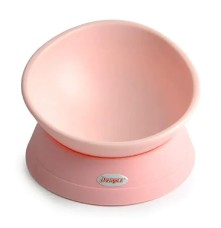
Core Value Dimensions of Customization Services
- Design Collaboration : Manufacturers participate in early-stage structural design, optimizing product solutions based on mold feasibility feedback, shortening the cycle from concept to sample
- Material Adaptation : Matching compliant raw materials according to target market regulatory requirements, such as EU REACH and US FDA food contact material standards
- Scale Flexibility : Seamless switching from trial production small batches to large-scale mass production, reducing brand inventory risks and capital occupation
- Category Extension : Relying on the same production system, extending from feeding bowls to pet beds, clothing, toys, and cleaning supplies, building a complete product ecosystem
Currently, approximately 34.9% of North American pet product consumption is supported by Asian manufacturers with OEM/ODM capabilities . Brands tend to outsource production to factories with multi-material processing experience and quality certification systems, while focusing themselves on market insights and channel operations. Under this division of labor model, manufacturers' design recommendation capabilities, for example recommending shallow-mouth bowl structures for brachycephalic breeds or narrow-mouth anti-ear-dip designs for long-eared breeds, have become differentiated competitiveness for winning orders.
Product Ecosystem Building: From Single Feeding Bowls to Full-Category Solutions
The low replacement cycle of feeding bowls, typically 2 to 3 years, forces manufacturers to maintain growth through category expansion. Factories with multi-category production capabilities can increase average order value and customer stickiness through bundled sales.
A complete pet living scenario typically includes the following product matrix:
| Product Category | Replacement Cycle | Synergy Logic with Feeding Bowls | Shared Production Capabilities |
|---|---|---|---|
| Feeding Bowls / Waterers | 2-3 years | Core entry product, establishes brand trust | Injection molding, metal processing |
| Pet Beds / Cushions | 1-2 years | Forms lifestyle scenario loop with feeding area | Sewing, filling, assembly |
| Pet Clothing | 6-12 months | Seasonal repurchase driver, boosts customer activity | Sewing, printing, cutting |
| Pet Toys | 3-6 months | High-frequency consumables, complementary sales with feeding bowls | Injection molding, sewing, assembly |
| Cleaning Supplies | 1-3 months | Essential for feeding bowl cleaning, enhances user experience | Injection molding, filling, packaging |
From a production economics perspective, multi-category sharing of the same manufacturing infrastructure can significantly amortize fixed costs . Injection molding equipment can produce both feeding bowl bases and toy shells; sewing lines can manufacture both pet clothing and bed covers. This flexible capacity configuration gives manufacturers stronger risk resistance when facing demand fluctuations in single categories. For buyers, partnering with factories capable of full-category production means shorter supplier management chains and more consistent quality control standards.
Regional Manufacturing Landscape: Asia-Pacific Capacity Meets Global Demand
The Asia-Pacific region has become the dual growth pole for global pet product manufacturing and consumption with a CAGR of 6.2%. Chinese manufacturers, leveraging complete industrial chain support and scaled production capabilities, are handling the majority of OEM/ODM orders from global markets.
Key Regional Market Growth Indicators
| Region / Country | CAGR | Core Driver |
|---|---|---|
| India | 7.1% | Urbanization and middle-class expansion |
| China | 6.0% | Cat economy boom and single population growth |
| United States | 4.8% | Pet health awareness and premium consumption |
| Germany | 4.4% | Environmental regulations and sustainable consumption |
| Japan | 3.7% | Aging society and small dog preference |
The uniqueness of the Chinese market lies in the strong rise of the cat economy. Data shows that China's cat population has reached 53.1 million, surpassing the 27.4 million dog population, and cat owners have higher refinement requirements for feeding utensils, including anti-tip designs, whisker-friendly shallow bowls, and wide-mouth structures suitable for wet food. This trend drives manufacturers to develop dedicated product lines for feline behavioral characteristics rather than simply scaling down dog products. For export-oriented manufacturers, understanding the pet structure differences of target markets is a prerequisite for product customization.
Future Manufacturing Trends: Integration of Intelligence and Preventive Medicine on Production Lines
Manufacturing innovation in feeding bowls is extending from exterior design to functional integration. The introduction of technologies such as smart weighing, RFID recognition, and antibacterial coatings requires manufacturers to possess interdisciplinary capabilities in hardware embedding and material modification.
In materials science, self-antibacterial coatings and temperature-sensing materials show broad application prospects. For example, smart coatings that change color when food spoils, or phase-change materials that automatically adjust bowl thermal conductivity based on ambient temperature, will redefine the functional boundaries of feeding bowls. These innovations are not distant science fiction concepts but direct responses to pet owners' core demand, "visible health assurance."
For manufacturers, success does not lie in chasing single technological gimmicks but in integrating material safety, behavioral science, and production reliability into systematic capabilities. Those factories that can establish unified quality standards among stainless steel polishing precision, injection raw material purity, and sewing stitch strength will occupy irreplaceable positions in supply chain integration over the next decade.
СЛЕДУЮЩИЙ:Какая подстилка для домашних животных на самом деле нужна вашей собаке или кошке?
Заинтересованы в сотрудничестве или у вас есть вопросы?
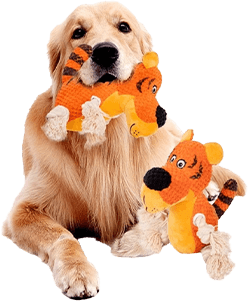


Независимо от того, нужен ли вам персонализированный продукт или профессиональный дизайн, наша команда воплотит ваши идеи в жизнь. Давайте вместе создадим мир, в котором домашние животные процветают и счастливы!
-
 № 13-1, деревня Хайкоу, город Сидянь, уезд Нинхай, Нинбо, Китай.
 -
 +86 13867893287
 -
 [email protected]
Авторское право © Нинбо Уэллтроп Промышленные Продукты Производство Ко., Лтд. Все права защищены.
